Digitization from an OT perspective, from data to action
Manufacturing Matters S02E06
Featuring Claus Kjelgaard from Omron
Release date: April 16, 2026


.svg.png)

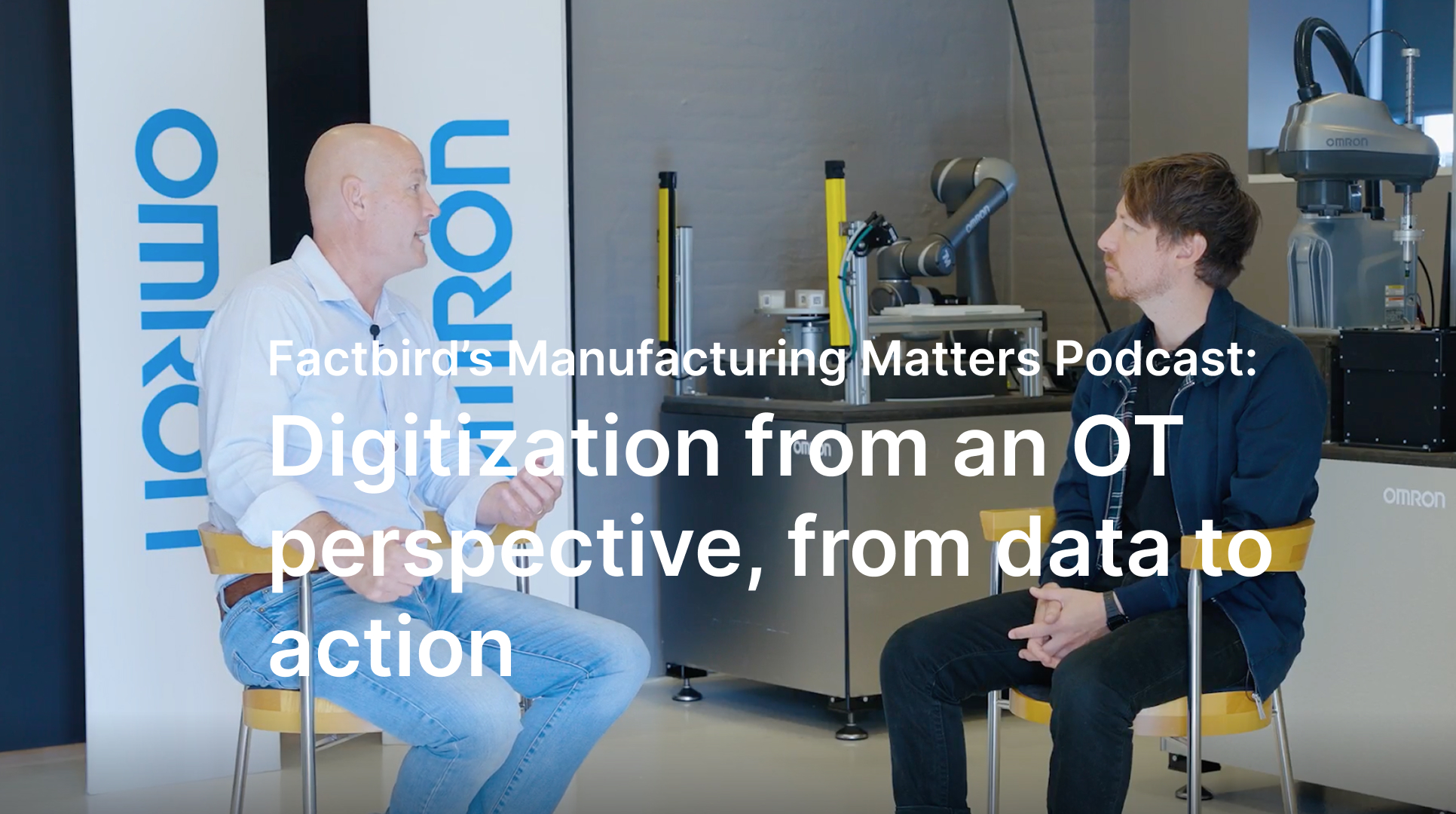
Digitization is discussed by manufacturers everywhere, but it’s a topic that sometimes turns fuzzy. In this episode of Manufacturing Matters, we sat down with Claus Kjelgaard at Omron’s Denmark HQ to get a grounded perspective from the point of view of Operational Technology (OT). We talked about what digitization means in practice, and what benefits manufacturers get from turning their production data into action.
If you’re not familiar with Omron, here’s a short version. Omron is a global technology company founded in 1933. In Denmark, Omron covers several sectors, including industrial automation where they support manufacturers and machine builders with automation products and application expertise. Their automation portfolio spans sensing, motion, control, vision, safety, and robotics, built to work together as comprehensive and integrated systems.
As an experienced automation platform specialist, Claus is the perfect guest for this topic, because he sits close to where digitization succeeds or fails. He has spent around 30 years in industrial automation, working with manufacturers and machine builders on how equipment is designed, connected, and run. In recent years, he has focused on the practical steps that turn “we have data” into “we improved performance.”
What digitization looks like from the OT side
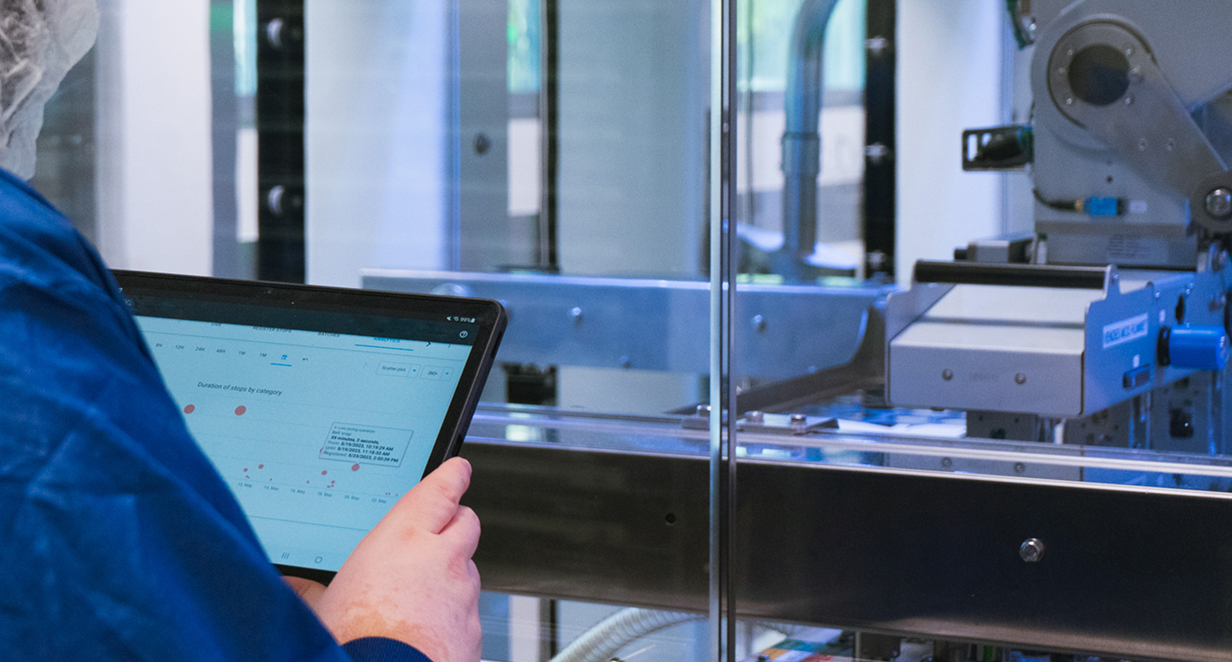
In our conversation, Claus breaks digitization into three practical layers, each with its own purpose.
1) Automation and connectivity on the machine level
This is the foundation. Modern production needs flexible equipment and faster changeovers, and that requires machines that are connected, integrated, and software-capable.
2) Data capture and analysis for efficiency
This is where many manufacturers are pushing right now. Not necessarily because collecting data is anything new, but because the tools and workflows for turning raw data into something useful have improved significantly.
“You have people in factories that kind of have a ‘good feeling for things’, but it’s not going to work like that forever. You need to have the data.” – Claus Kjelgaard, Omron
3) Digital twins and virtual environments
Claus sees digital twins as part of the digitization roadmap too, and he describes multiple “loops,” from product development and software testing to real-time machine mirroring. For many manufacturers, this will become even more relevant over the next five to ten years.
A four-step path that keeps digitization practical
When you move from definitions to execution, Claus suggests a simple sequence:
- Collect
- Exchange
- Visualize and analyze
- Act
The final step is the point of the whole system.
“If you just dump data to a database, dump data to a cloud, dump data to Factbird, dump data to whatever, but you are not looking at it and acting based on facts, then forget it.” – Claus Kjelgaard, Omron
1. Collecting data, three realistic starting points
From an OT perspective, collecting data is often the first real hurdle. Claus outlines three routes manufacturers typically take.
- Retrofitting, where you add sensors to older machines to collect the signals you need
- Readout, where you pull data from existing PLCs even if the machine was not designed to expose it cleanly
- Total control, where the machine is built on an integrated automation platform, giving you broad access to data from the start
2. Exchanging data, where OT meets IT
Once you have raw data, you need to find a way to move it reliably into whatever tools that will use it. This is where many projects slow down, because it’s easy to underestimate the importance of the real work of standards, formats, and maintenance.
Claus makes a simple point with the example of PLC programmers. They are usually experts in building machines, but they’re likely not as competent when it comes to maintaining messaging pipelines and payload formats.
“The guy who programmed, he’s a specialist in program machines. But maybe he’s not specialized in MQTT messages and JSON objects and all that stuff.” – Claus Kjelgaard, Omron
In our chat, Claus describes how Omron has worked on libraries and API approaches that make data exchange easier, including work he’s done supporting integrations with partners like Factbird.
3. When visualization becomes useful across lines and sites
Visibility becomes much more valuable when the data is standardized and comparable.
Claus explains why cloud and edge approaches are often attractive, as they allow managers and production leaders to access a unified view across lines, and sometimes across sites, without having to “go down to the machine” to see what’s really happening.
He also puts emphasis on the idea of finding a “best batch” or “golden batch” and then working backward to understand why it performed better than the one before.
4. Acting on facts, where improvement actually happens
Finally, he shares some practical examples of what “act” can look like once you trust the data:
- A weekly review with the operators running the machine
- Fixing overlooked steps during changeovers
- Solving technical issues on the equipment
- Identifying upstream causes, like materials or packaging inputs that create recurring problems
He also highlights predictive maintenance and energy monitoring as areas gaining importance, driven by cost, regulation, and the need to understand energy cost per unit produced.
How industry leaders achieve results
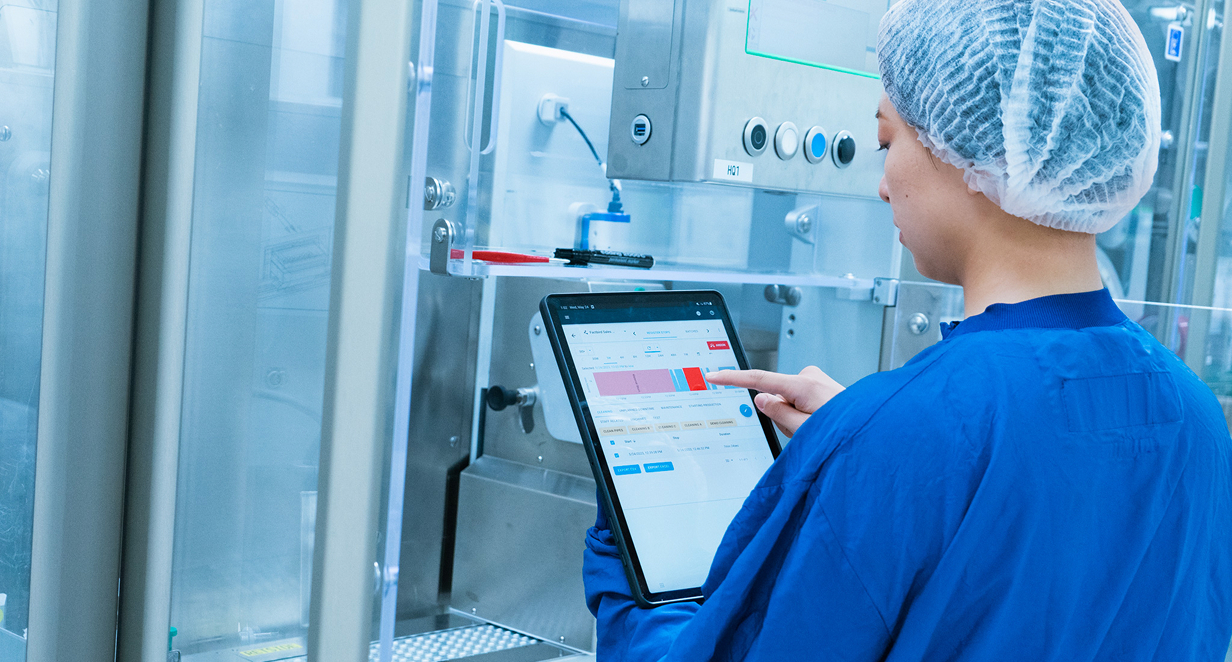
When asked what the best companies do differently when it comes to digitization, Claus highlights getting buy-in across all roles. The strongest results come when digitization isn’t owned by any single individual. The real winners are the manufacturing companies that make sure that adoption is shared by production leaders and supervisors too.
“When it’s not only a technician who really loves to sit down and do some nice dashboard, but you have different levels in the company involved, then it works.” – Claus Kjelgaard, Omron
Stay connected with the podcast
For more insights and practical tips on continuous improvement, lean manufacturing, and other industry topics, stay tuned to Manufacturing Matters. If you have any questions or topics you’d like us to cover, feel free to reach out to us via LinkedIn or email.
And remember to subscribe to Manufacturing Matters to get notified when the next episode is available on Spotify, Apple Podcasts, YouTube, Amazon Music, and other popular podcast directories.