How Randers Tegl turned a stubborn bottleneck into 30% more output

A century of Danish brick, still run by the family that started it
Randers Tegl has been making bricks since 1911, when Carl Piper bought his first brick factory. It's still family-owned, run today by the next generation of Pipers, and has grown into the largest brick supplier in Scandinavia, with factories across Denmark and Germany.
Brick kilns run for days at a stretch and can't be throttled to match demand. A handful of machines, extruders, presses, dryers, set the ceiling for an entire factory's output, so a stumble on one line becomes everyone's problem. Maintenance budgets are also notoriously hard to defend without numbers to back them up.

Meet the heroes of our story: Jonas and Morten
Jonas Bønsø is Randers Tegl's project manager, responsible for the company's CAPEX portfolio and the rollout of new equipment and digital tools. He came up through an operations role at the company and has an understanding of the dynamics of the shop floor. His experience is also what shapes his approach to digitalization and what to pay attention to.
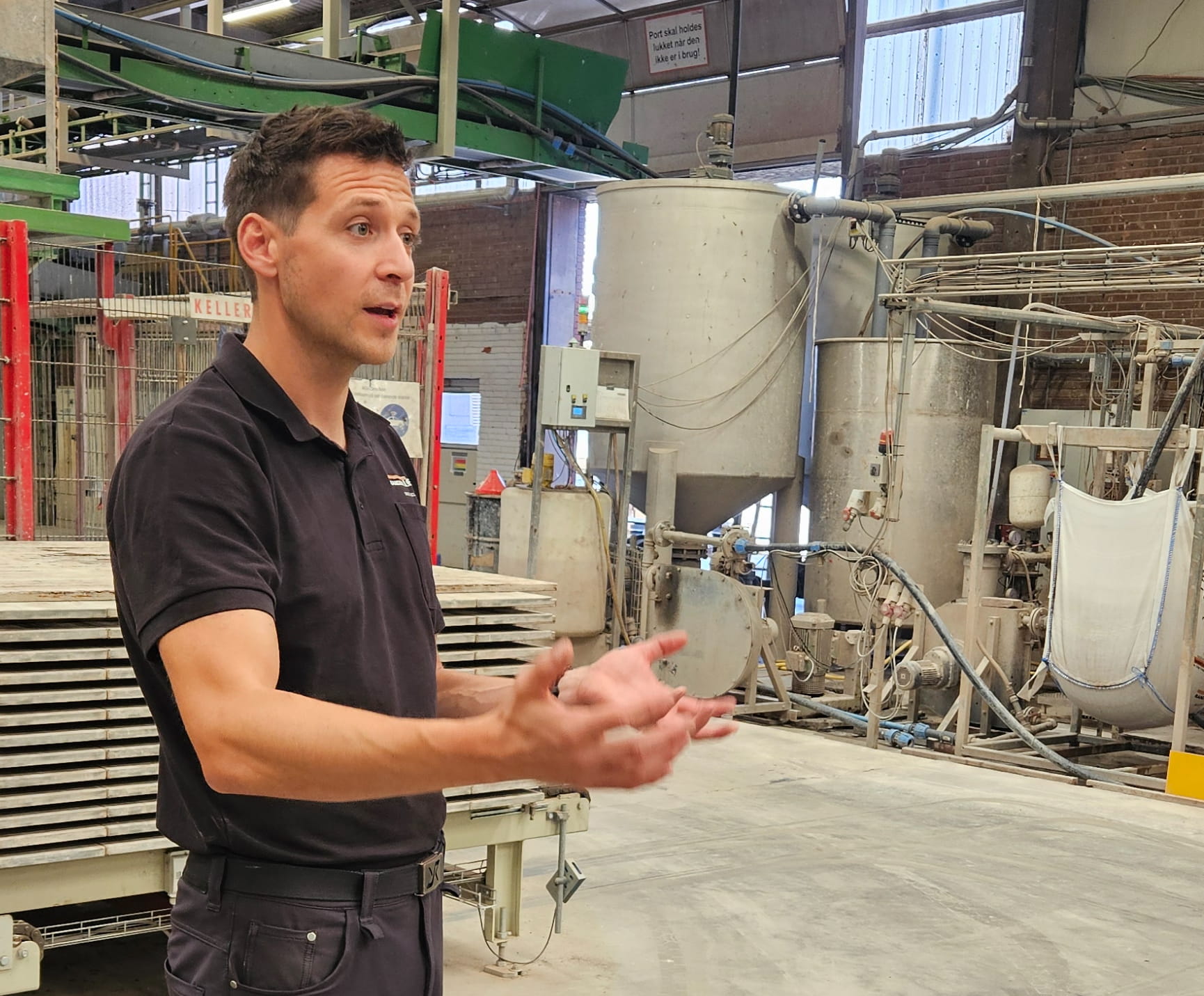
"If production runs effectively, good production numbers are easy to report. But good reports at the CxO level rarely make a major difference on the shop floor. A project is successful when the operator is more likely to succeed in his daily job than before." – Jonas Bønsø
Morten Holst Bjørno leads production across Randers Tegl's factories in Denmark and Germany, and is the one who decides whether a working pilot earns a budget for every site. He had a clear idea of both the company's starting point and what the company needed.
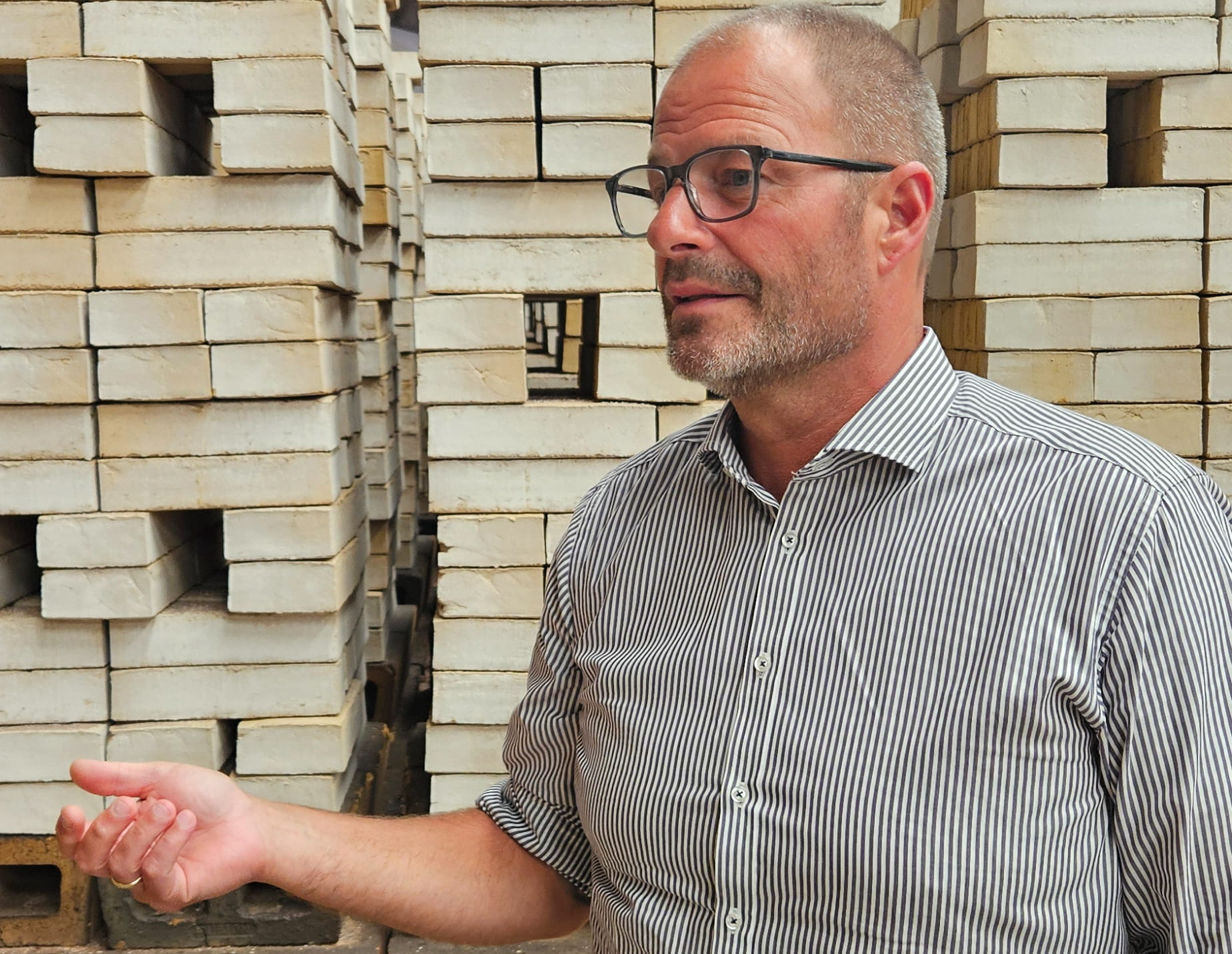
"We had strong operational capabilities, but decisions were often based on fragmented or delayed information." – Morten Holst Bjørno
The problem: a weekly number with no story behind it
Before Factbird, Randers Tegl ran on a weekly cycle: a quick look at the KPIs, checking the result, and rarely knowing why the numbers look the way they do. The team could see what had happened during the week but never the real reasons behind it, and struggled to pin down why they kept missing the weekly production target.
"It's often difficult to show value for money when talking about maintenance, because it's complicated to show the effect of not doing the maintenance jobs." – Jonas, on why maintenance tends to be forgotten.
Operators, meanwhile, kept flagging the same minor stop on one machine as a real and significant problem. Management heard it, but without any real data to point to, a recurring five-minute stoppage is easy to write off as noise, even when it isn't.
"In a production environment where maintenance costs are significant and uptime is critical, this creates both inefficiencies and missed opportunities." Morten, on why this gap looked systemic rather than local.

Why Factbird: high value, low effort
Randers Tegl had already tried standardizing with Lean tools, checklists and standard work instructions. Much of it, Morten admits, sat unused until it was too late, or couldn't be found when it actually mattered. Early conversations inside the company had already ruled out anything heavy or complex. They needed a solution that was lightweight, fast to deploy, and easy for operators to adopt.
A proof of concept was rolled out, and delivered immediately. Bottlenecks and stop causes became visible within days, and the install barely affected the daily operations. That's also what got the board comfortable scaling: low risk, high transparency, and a standardized way to track KPIs across every site.
"This combination, high value, low effort, is rare in production environments." – Morten
Rolling it out: two lines, on purpose, before thirty
Jonas didn't roll Factbird out everywhere at once. He picked two lines, and picked them intentionally: both were known bottlenecks.
The team made sure to start with a tight scope in order for them to focus on the implementation itself and tracked OEE1, OEE2, and OEE3 from day one, so the baseline was never in question. These procedures meant that they had a waterproof success story to point to, before implementing Factbird on additional lines.
"It took us twenty minutes from receiving the box until two machines were up and running the data in Factbird," Jonas, on the almost anticlimactic installation.
The harder work was cultural. Jonas gave managers one to two weeks to validate the data before handing stop-reason categorization to operators, then held himself to a strict rule: within two weeks of an operator starting to log stops, a manager has to show that operator what the data is actually used for. Rather than schedule new Factbird meetings, he folded the rollout into meetings that already existed, at times stepping in as facilitator to show what the data could do.
"Registration without knowing what the registration is used for will result in a lack of discipline for keeping up with the registrations." – Jonas, on why clarity matters.

The first "aha" moment
Jonas's patience paid off. There had been a running disagreement about a stop on one of the two trial lines. The managers didn't take it seriously enough, but the operators kept saying this was a major reason for not reaching the production numbers. But within a few weeks of turning Factbird on, the data settled it: that stop was one of the largest single reasons the line missed its numbers. By making a small investment, Randers Tegl had eliminated it for good.
What made it stick
A working install brings both gratification and optimism, but the fact that it works can sometimes mistakenly interpreted as new habits. This is more common than you might think, and Jonas is blunt about the risk of overestimating changes.
"Implementing a system like Factbird can easily end up as another system in the line of good ideas with valuable output. Production data is nice to have, but without action based on the data, you're just giving your operators another job without proper sense." – Jonas
So Jonas made sure leadership also set the example. They stood on the frontline when data-based actions were made, and were ready to follow up. That way, the whole team realized that proper registration actually matters, and that they could impact the efficiency numbers.
The results
The numbers from that first bottleneck line are stark. Before Factbird, the line missed its target nine weeks out of ten. After, it hits target nine weeks out of ten, and produces 30% more when it's running. The equipment that used to set the pace for the whole factory now waits on other equipment for roughly ten hours a week. They've also seen a +7 percentage point OEE improvement across their Danish sites, just in 2026.
At leadership level, the change looks less like a single win and more like a different operating rhythm. Factbird has been worked into Kaizen meetings, and the teams are prioritizing improvement work by measurable impact instead of having to rely on guessing what steps to take next.
"Instead of reacting to breakdowns, we can focus on recurring stop causes and prioritize preventive actions. Data is no longer something we look at afterwards. It is embedded in how we operate every day." – Morten

Their advice for other manufacturers
Asked what he'd tell another manufacturer starting out, Jonas doesn't hesitate: get the operating team ready to follow up on whatever the data shows and start with a narrow scope. After that, just start. He's just as clear about what's not worth obsessing over.
"Don't get stuck on details. Most factories have the potential to improve efficiency without needing to know exactly whether nameplate capacity is 100 pieces per minute or 101.3." – Jonas
What's next: proving it can last
Jonas is candid about the risk that comes after a successful rollout. He's aware of the fact that the novelty value is now gone, and that this stage is dangerous, since there's a risk of falling back into old habits. For now, the priority is anchoring Factbird into daily routines rather than expanding to new sites. There's still, in his words, plenty of potential to harvest from the current setup.
Part of that next chapter is Connected Operations, with operator-led maintenance as one of the reasons for adding it. Over the years, Randers Tegl's Lean program has produced hundreds of checklists and standards, many of which simply stopped getting used. Introducing Connected Operations puts them back to work, surfacing the right checklist on the Factbird screen at the exact moment an operator needs it.
It's the same logic Randers Tegl has followed since 1911: give people the right information at the right moment, and let them do the job they're already good at.

.svg)