What "connected operations" means for the person on the floor
Beyond the dashboards: what digitizing shop floor work actually changes for the person running the shift, and what it doesn't fix on its own.

Ask an operator what the term "connected operations" means and you'll likely get a shrug, or a joke about yet another dashboard that nobody asked for or ever looks at. Ask a plant manager the same question, and you might get a fancy slide with the words "digital transformation" on it. Neither answer is wrong. But neither is particularly useful, because the term has been stretched to cover everything from IoT sensors to full enterprise rollouts, and somewhere in that stretch, the person actually doing the work got left out of the definition.
So let's define it from the floor up instead.
The paper problem is bigger than paper
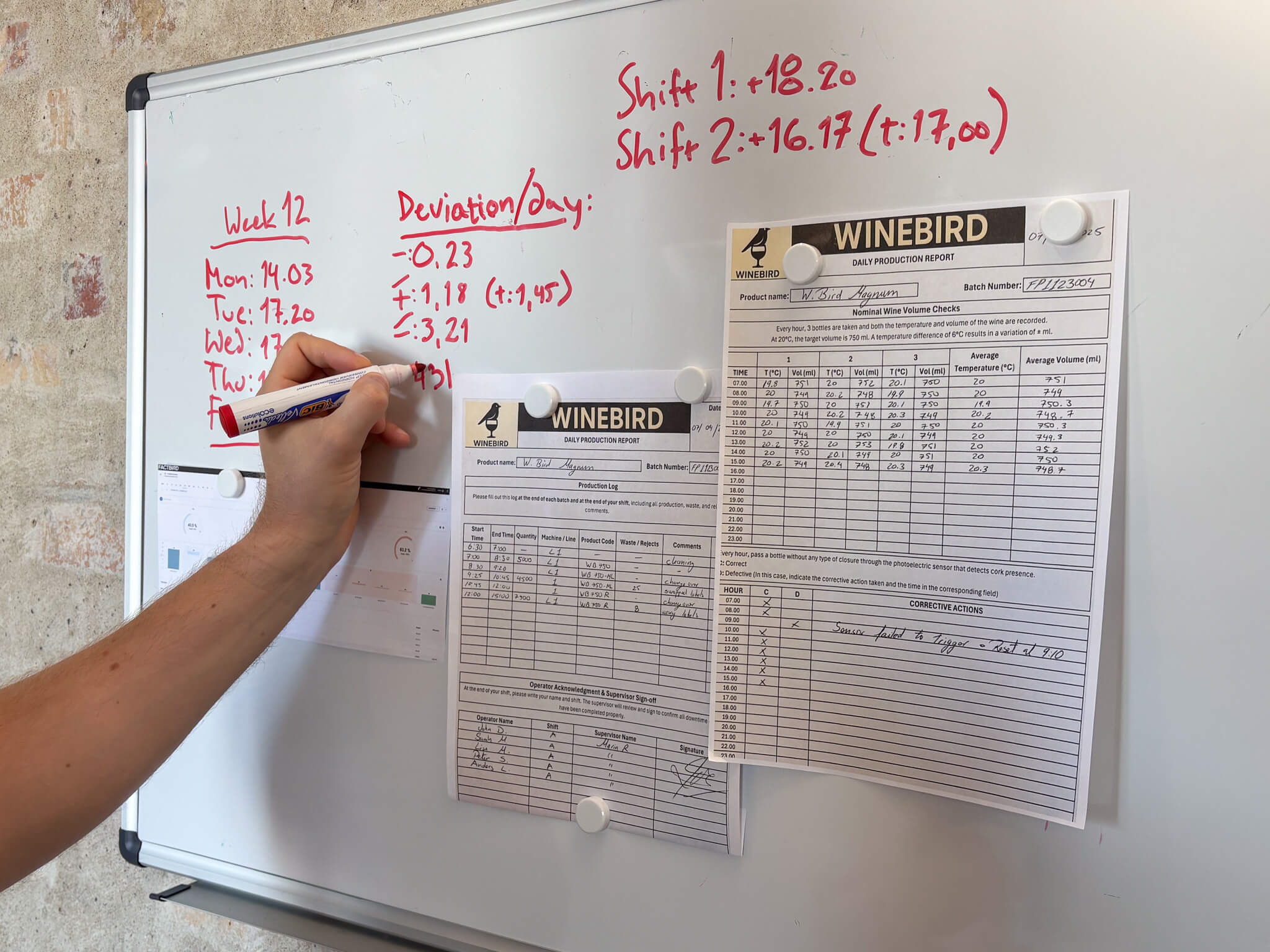
Start with a fact most plant managers already know but rarely say out loud. A 2021 Parsable survey of 1,400 frontline manufacturing workers across five countries found that 81% were still relying on paper-based processes to follow instructions or log their work. Four out of five operators, working off paper as their daily default, not the exception.
The cost shows up in places that rarely get logged as "paperwork cost." A supervisor cosigning a checklist an hour after the batch has already moved on. A new hire flipping through a thick binder for an SOP that was updated last month but then never reprinted. An auditor asking for a record that technically exists, just somewhere in an unmarked and unorganized filing cabinet in another building.
It also shows up in turnover. In that same research, 45% of frontline workers said the chance to work somewhere more digitally equipped would factor into a decision to leave. A separate 2023 survey from PwC and the Manufacturing Institute found more than a third of manufacturers reporting frontline attrition above 10% in just six months, with fewer than half of leaders confident that most of their frontline workforce feels engaged.
Paper doesn't cause turnover by itself. But it's a daily reminder to the person doing the work that the tools around them haven't kept up with the job.
What actually changes for the operator
If we strip away industry language and buzzwords, connected operations comes down to four practical shifts on the floor.
- Guidance shows up in the flow of work instead of somewhere else entirely. Instead of hunting for the right checklist, the right SOP, or the right version of a form, the operator sees what needs attention next, right where they're already standing. When a form changes, it changes everywhere at once. Nobody works off last quarter's printout by accident.
- Quality and compliance gets built into the task rather than added on afterward. A digital sign-off happens the moment the check is made, with a traceable record attached automatically. For operators in regulated environments, that also means fewer moments of dread before an audit, since the documentation was never a separate exercise from the work itself.
- Maintenance becomes something that operators can act on immediately. Simple, well-defined maintenance tasks move from "wait for the technician" to "handle it now," while the bigger jobs still route to the right specialist. The goal here is closing the gap between noticing a problem and fixing it, not cutting the maintenance team out of the loop.
- A faster and more direct way to ask for help. A stuck line shouldn't mean walking the floor looking for a supervisor. A real-time signal, sent and tracked, gets the right person moving without the operator leaving their post to chase one down.
By themselves, none of these four things are dramatic. But when added up, they change what a shift feels like. Instead of running on whatever the last person remembered to write down, the floor runs on what's actually happening right now.
Why this matters past the paper shift
The easy framing here is efficiency, and it's a real one. But the more interesting story is what this does to the relationship between the person on the floor and the company they work for.
Deloitte's research on digitally equipped frontline workers points to a 22% productivity gain tied to that access. The figure is worth treating with some caution, since it comes from a broader smart manufacturing survey rather than a single controlled study, but it still lines up with what plant managers tend to report anecdotally: people move faster when they're not fighting the tools that are meant to help them.
There's a retention angle too, and this carries weight. An operator asked to solve a problem with information that's a shift behind, on a form last updated before they were hired, isn't going to feel like the company takes their job seriously. An operator with guided workflows, clear ownership of routine maintenance, and a way to flag a problem the instant it happens is being treated like someone whose judgment matters. People notice that difference, and it shows up in whether they stick around.
An honest caveat
None of this works by just installing a software and walking away. A rollout that ignores how operators actually move through a shift, that adds five new steps to save one old one, or that gets handed down without asking the floor what's actually broken, earns the same shrug as before. The technology is the easy part. Designing the workflow around the person using it, rather than the other way around, is the part that takes real work.
That's the test worth applying to any tool marketed under this label, ours included. Does it remove friction from a real shift, or does it just add a new screen to check? Was the person on the floor in the room when it was designed?
The answer tells you more than any feature list will.