Visual Intelligence: measure what your sensors can’t see
AI that turns what cameras see around your machines into production data in Factbird, one station at a time.
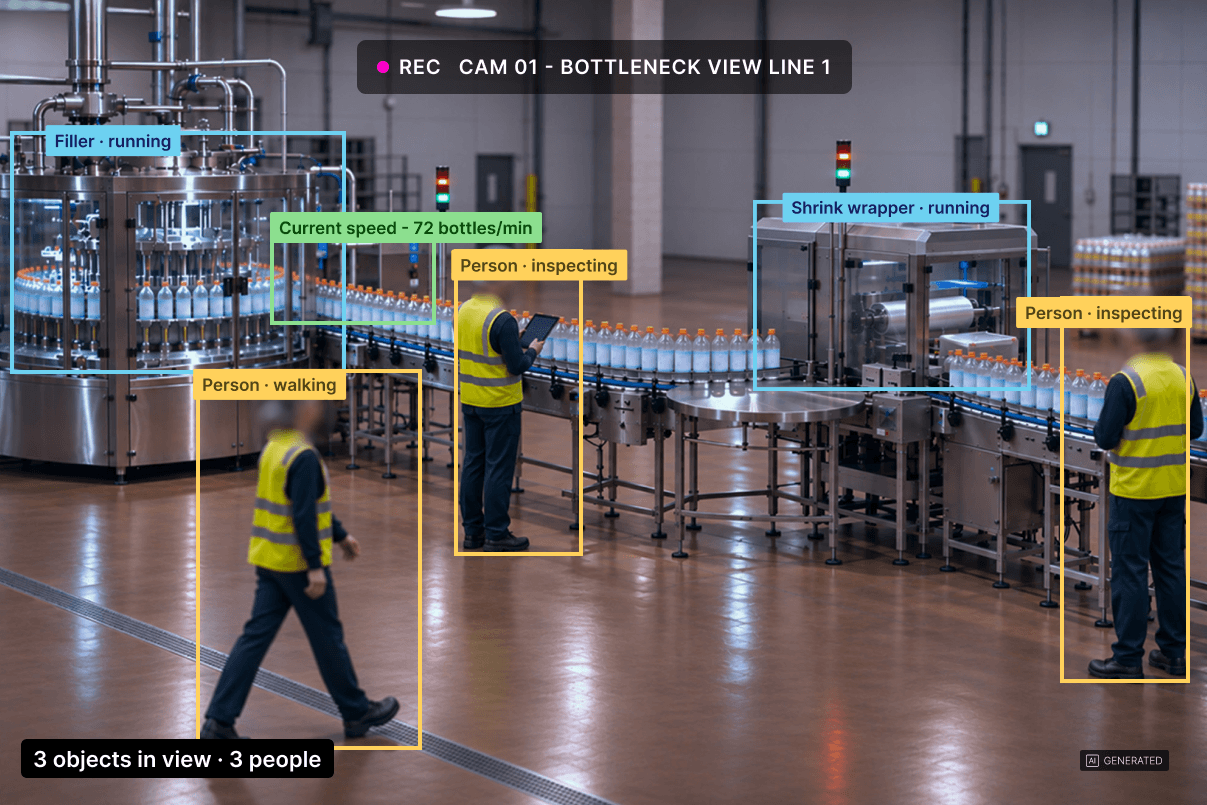
Your line slows down at 2:10 p.m. The PLC controlling the machine, says it’s running. Your dashboard shows the speed loss and nothing else, because nothing else on that line produces a signal. Somewhere upstream a station ran out of material, or an operator spent four minutes clearing a jam that never registered as a stop, or product piled up between two machines that both reported normal. You’ll find out at the end of the shift, from whoever happened to be standing there.
Visual Intelligence puts a camera on that gap. It uses computer vision to turn events on and around the line into numbers. Those numbers land next to the downtime, speed, and performance data you already have in Factbird.
What does Visual Intelligence do?
Visual Intelligence measures the parts of your production that other process instrumentation can't reach. Sensors, counters, and PLC connections are good at telling you what a piece of connected equipment is doing: output, speed, state, downtime. But they tell you nothing about the manual station next to it, the material flow between two machines, or whether the station was in use when the cycle ran long.
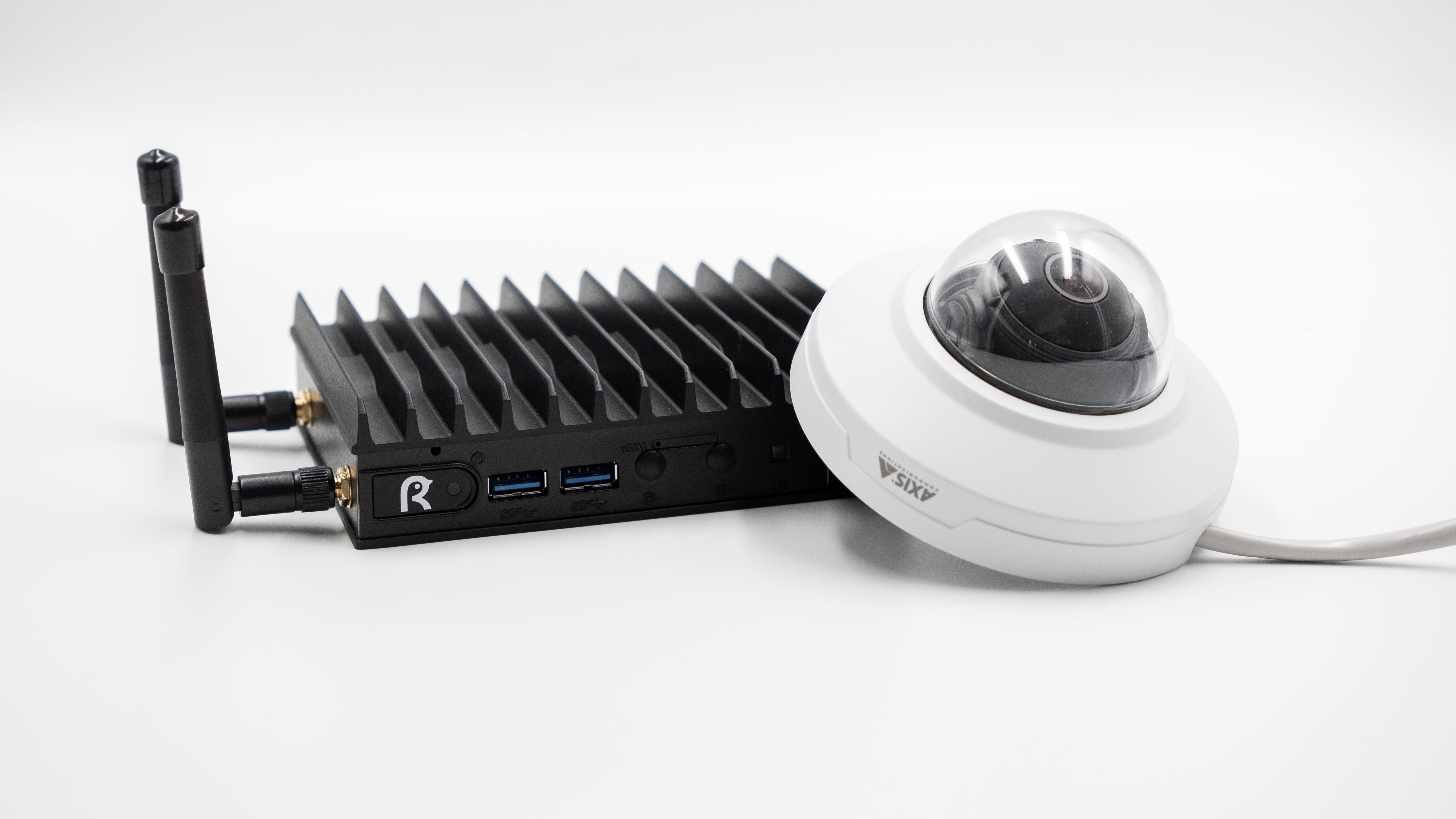
In the past, the way to measure that was to simply stand there with a stopwatch. That might work for an afternoon, but doesn’t give you a signal you can chart by shift, compare across products, or check again next month. Visual Intelligence creates that signal. A camera watches a defined area, the detections are processed on the Factbird® EDGE at the line, and the result arrives in Factbird as data: a cycle time, a station state, a starved-or-blocked flag, a count.
What can it measure?
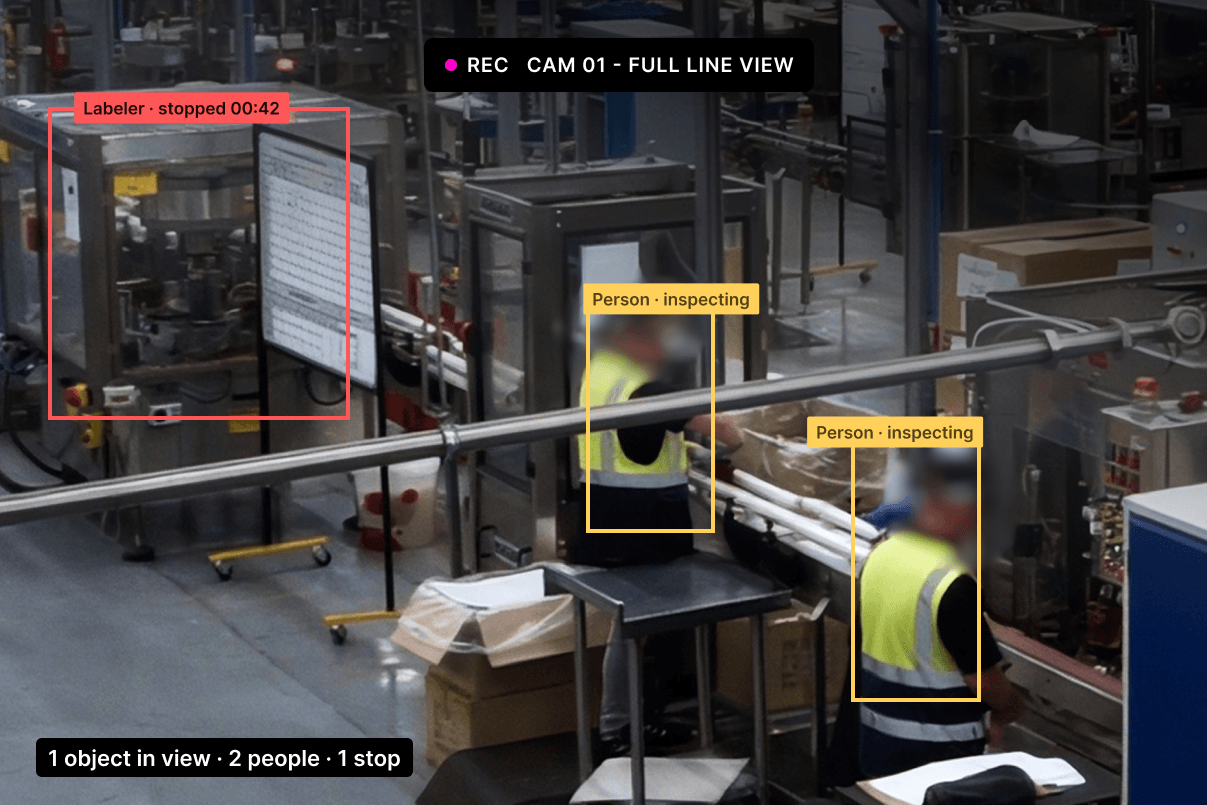
Depending on the setup, Visual Intelligence can produce signals for product counts, cycle time, station utilization, machine state, product flow, and starved or blocked conditions. A starved station is waiting for material. A blocked one can’t pass product on because the next step is full. You also get video around a detected event, so when a signal changes you can look at the thirty seconds around it instead of scrubbing through an hour of footage.
Each setup starts with a production question. If a manual packing station is holding back the line, you measure its cycle time. If a line loses speed without ever recording a stop, you detect starved and blocked conditions at the stations feeding it. You pick the question first and the camera placement second. Covering the whole floor in cameras and sorting it out later is the expensive way to learn nothing.
How does it fit with the data you already have?
A standalone camera system can show you what happened, but the footage lives in its own system, and someone still has to find the right clip, interpret it, and match it against the production record by hand. Video you have to scrub through is evidence. A cycle time you can chart by shift is data, and data is what you can compare.
The signals land in Factbird alongside your downtime, speed loss, performance, and quality-check data. You review them the way you review everything else: by shift, batch, product, line, or site. That lets you ask the specific questions. How often is this station blocked? Does it happen on every shift or only nights? Which products run the longest manual cycles? What happens to output downstream when the feeder is starved?
Supported signals are also available to Factbird analytics, the AI Assistant, and Factbird MCP. That means you can ask about your cycle times and blocked stations in plain language, in Factbird or in Claude, ChatGPT, or Copilot. They become part of the view your team already uses.
Does it find the root cause?
No, and we’d rather say that plainly than let you find out in a demo. Visual Intelligence adds measurable context to the investigation. It tells you whether material was available, whether the station was in use, how product was moving, and whether a process was blocked at the moment performance changed. Manufacturing lines are too complex for a single detection or camera angle to explain every loss.
It replaces the reconstruction. Today, someone pieces together what might have happened from a reason code, a maintenance note, and whoever remembers. That eats hours. With Visual Intelligence, you start from what the camera measured. You test your assumptions against recurring patterns and build the case for which bottleneck deserves attention first.
It does use AI to point you somewhere. Visual Intelligence highlights events worth investigating, so you know where to look before you start digging.
Is it safe to put cameras on the floor?
Cameras in production raise fair questions, and we built to answer them. Detections run on a Factbird® EDGE device, directly at the line. Faces are blurred on the device before any video leaves it. Access to video is controlled through Factbird’s permissions, so you decide who can review footage and who sees only the resulting data.
Technical controls are one part of doing this responsibly. Privacy law, works council agreements, and worker consultation requirements differ by country, state, and site, and each installation needs to be assessed against the local rules before cameras go up. We’ll raise that at the start of every setup, and we’d expect you to.
When is a camera the wrong tool?
Fairly often, and we’ll tell you when it is. A standard sensor is the simplest way to count uniform products. A PLC connection already gives you machine state for downtime tracking. Visual Intelligence picks up where those stop. It counts products that are irregular, overlapping, or hard to detect with conventional sensors. It also covers manual processes, station conditions, and areas where a useful machine signal is unavailable or hard to get to.
Factbird combines all of these in the same platform. You add a camera where context is missing and keep the sensors and PLC connections that already work.
How do you get it?
Visual Intelligence is already available. We supply the camera and the device and train the AI on your products and stations, so there’s no big IT project on your side. We set it up with you one station at a time. If you have a manual process, a recurring speed loss, or a station you can’t measure today, that’s a good candidate. Reach out to your Factbird contact or get in touch, and we’ll look at the station with you and tell you whether a camera is the right way to measure it.