How Duraco got the shop floor and the head office reading the same numbers

One rollout, two very different vantage points
Duraco has been making adhesive-based tapes, liners, and flexible packaging materials since 1947. Today the company runs as a handful of focused businesses under one roof, among them Duraco FlexPack and Duraco Specialty Materials, each running its own production lines across multiple sites.
That structure creates a familiar problem for any manufacturer with more than one plant. The floor sees things headquarters can't, and headquarters needs things the floor was never set up to produce. Getting both to work off the same facts, in the same moment, is harder than it sounds.
This is the story of what happened when Duraco tried to close that gap, told from both ends of it. Tracy Bruntz, Production and Quality Manager at Duraco FlexPack, saw it from the floor. Tony Michalski, Continuous Improvement Manager at Duraco Specialty Materials, saw it from the enterprise level, across the whole network.
The view from the floor
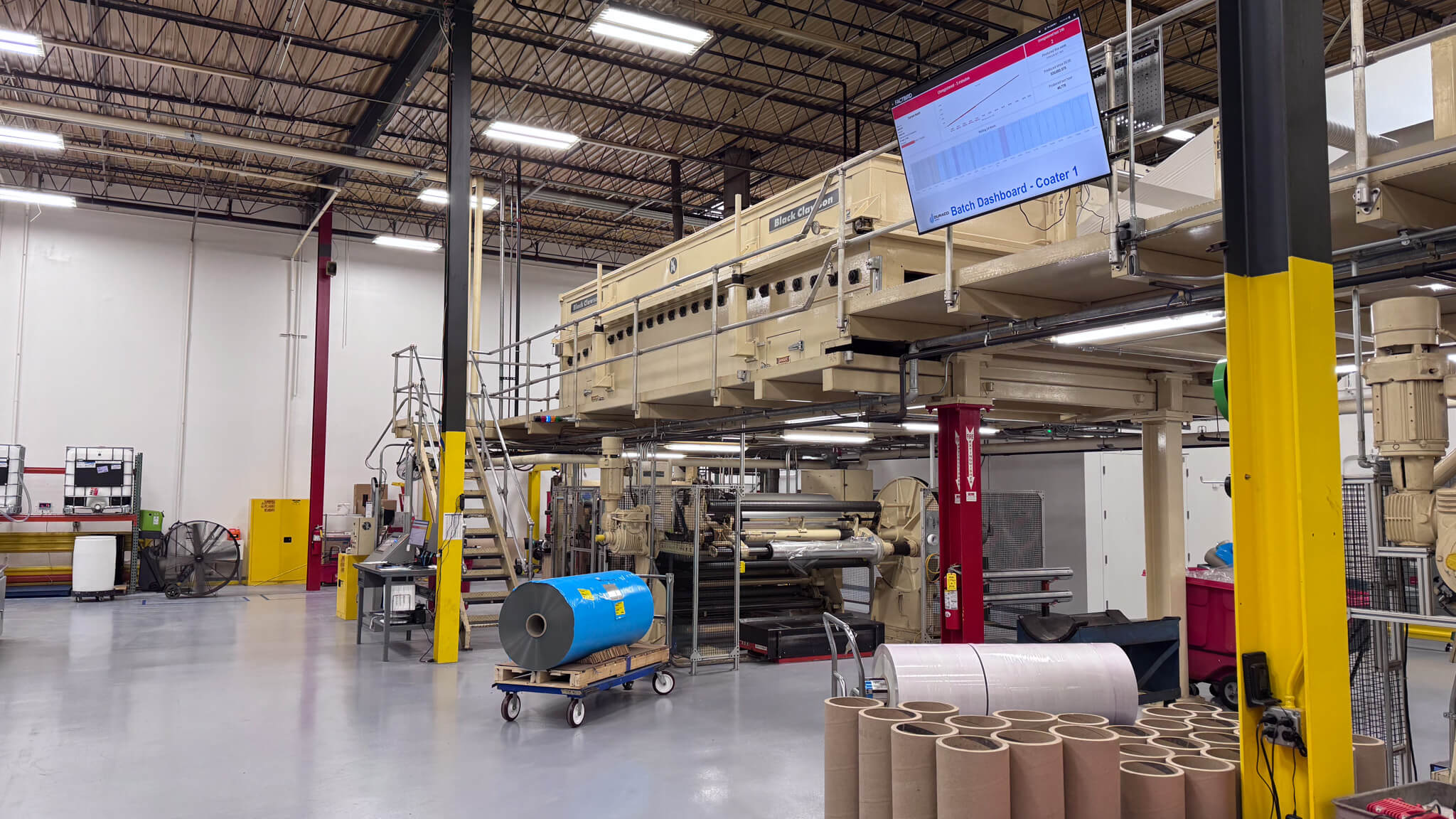
Before Factbird, Tracy's plant ran on hour-by-hour boards. Someone photographed the board once a day, and a colleague compiled that into a report and sent it around.
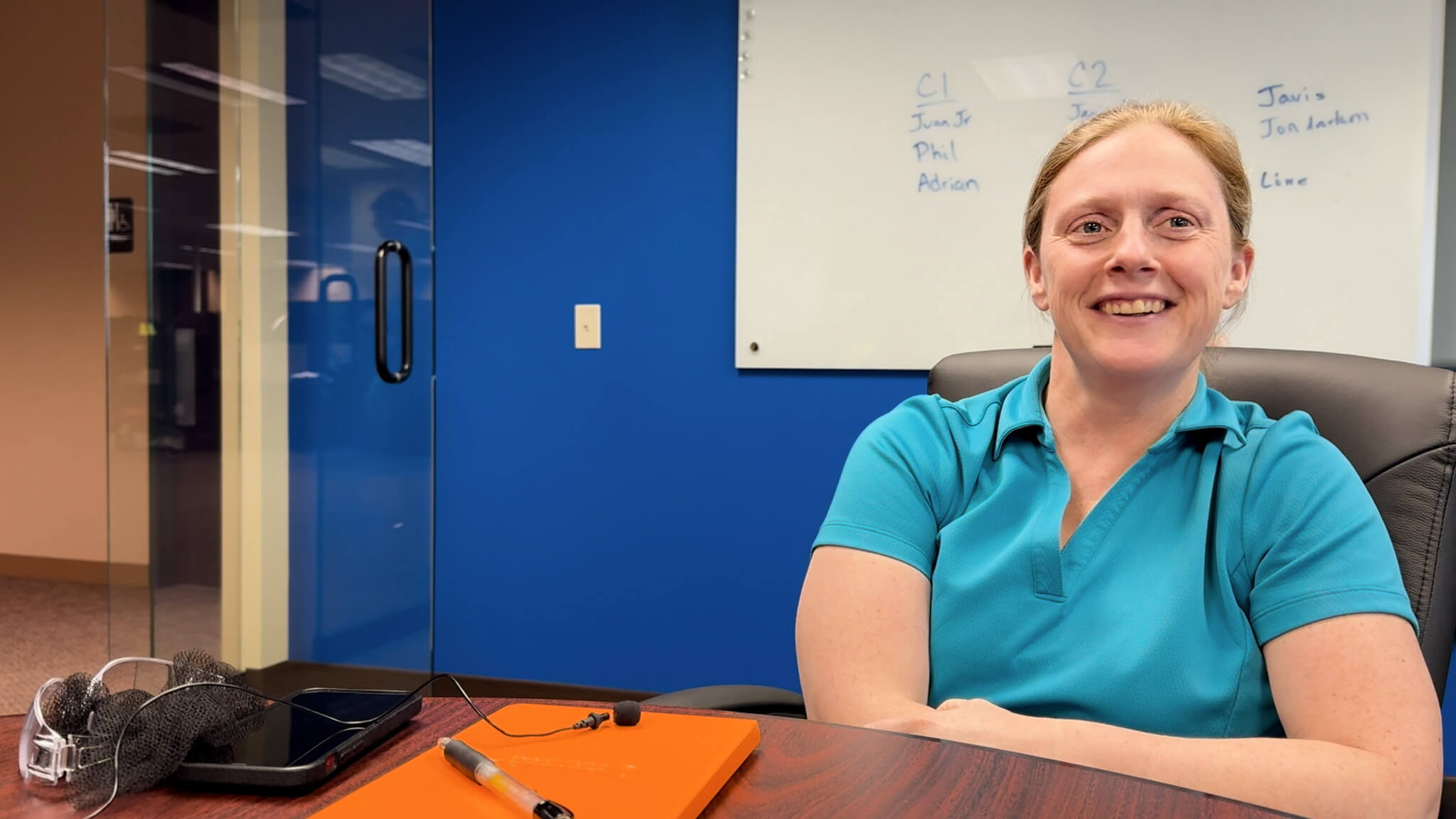
"There was really nothing to kind of tell me for a week what was our top downtime events, unless I created it in some type of spreadsheet." – Tracy
It's a familiar shape of problem. The board captures a snapshot, not a pattern, and turning a week of hourly photos into an actual answer means someone has to build that answer by hand, after the fact, if they have the time at all. Most weeks, nobody did.
It also left the floor's own read on a line open to argument. Operators had a sense of how long certain jobs took. Nobody had the data to settle it either way.
The view from the enterprise
Tony was looking at the same kind of gap, just from higher up and across more sites at once.
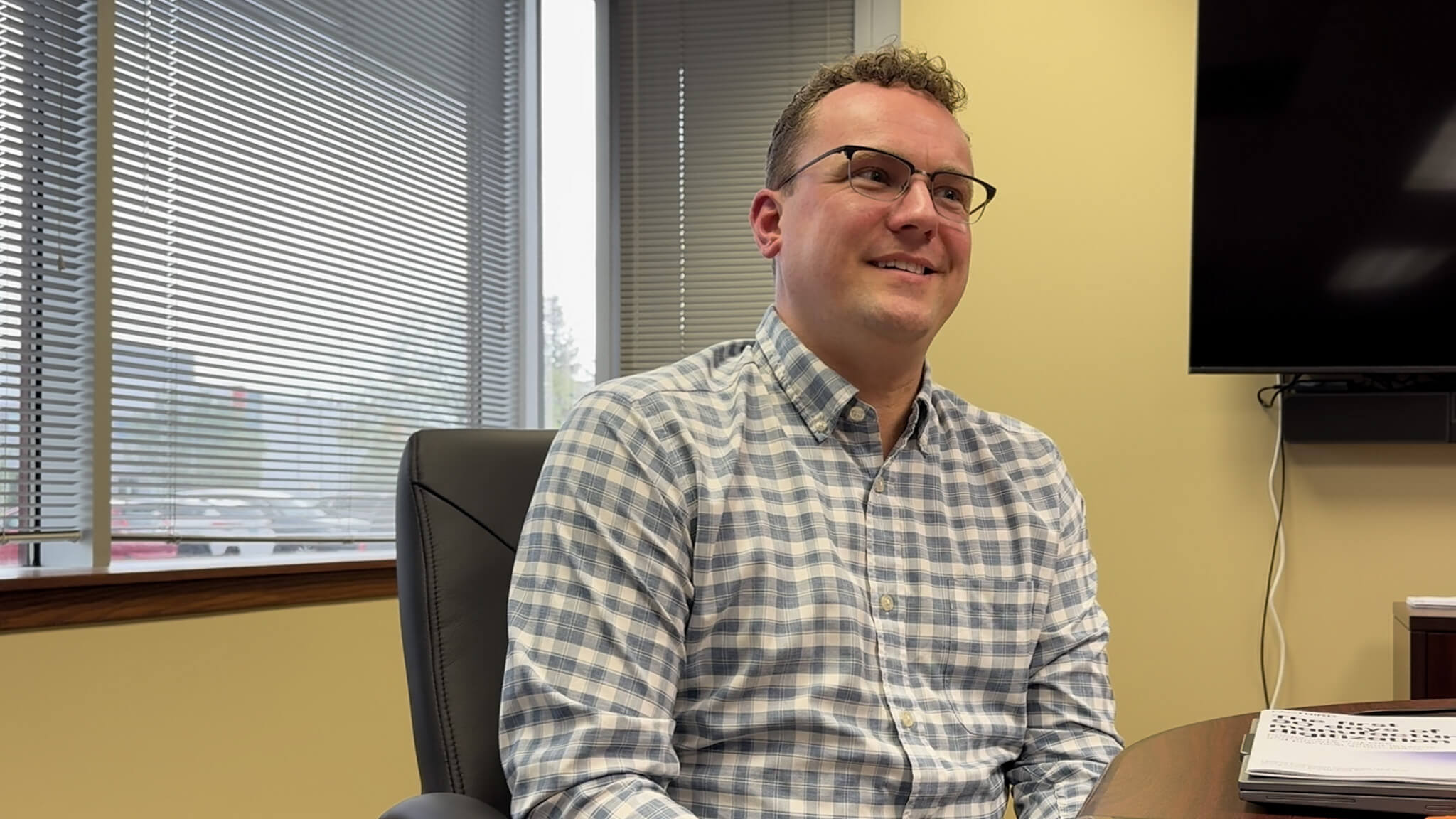
"At the enterprise level, here at Duraco, we were not able to see what our machines were doing, what the downtime reasons were, what the issues were, or even have a sense of how much available capacity is really in the network on the various coaters that we installed." – Tony
Multiply Tracy's whiteboard problem across a network of plants and it stops being a local inconvenience and starts being a strategic blind spot. Every site was tracking downtime and OEE its own way, on whiteboards, paper, or Excel, which meant none of it was comparable, and none of it rolled up into a single view Tony could actually act on.
Duraco looked at a range of products to fix it, some more complex, some closer to a one-time purchase. What decided it wasn't any single feature.
"Based on the deployment, the configuration, and the ease of the interaction from the operator, with the ability for the data to roll up at an enterprise level, that's kind of why we ended up going with Factbird." – Tony
That last part is the detail that mattered most. Plenty of systems can capture data from one line. Far fewer make that data usable to both the operator standing next to the machine and the person trying to compare performance across an entire network. Duraco needed both at once.
Two rollouts, the same week
Whatever Tony chose had to actually work for the people running it day to day, at every site, without a drawn-out install.
"The shop floor people, the operators, the maintenance technicians, even the managers at the site, rolling it out was pretty easy. We tried to have the system ready to go and not make the team need to do the lift on day one." – Tony
Tracy's plant was proof of how literally that held up.
"You guys came in on a Monday. You spent the first shift configuring everything. By second shift, which was 5 p.m., we were training the night shift on how to do all the entries." – Tracy
One shift to configure. The next to train the crew that would use it around the clock. That kind of speed matters for a reason beyond convenience: the longer a rollout drags on, the more it looks like a project instead of just how things work now, and the easier it is for people to wait it out rather than adopt it.
What changed, from both ends
On the floor, the clearest proof point was small, specific, and previously unresolvable. Operators had always described roll changes as a 10-to-15-minute job.
"When really now we're seeing four and a half to seven max. Where we came from to where we are now, especially with our roll changes, that has been one of the most beneficial things." – Tracy
The number itself matters less than what it replaced: an assumption everyone had repeated for so long it had become the plant's working truth, corrected the moment someone actually measured it. That's the same trap the enterprise-level view had been stuck in too, just at a larger scale, numbers people believed because nobody had ever been able to check them.
At the enterprise level, the change looked less like a single moment and more like a shift in daily habit.
"With a simple couple of clicks, we can see an enterprise view and get reports every day. People are really digging into the data, whereas beforehand the data was more of a, you have to go collect the data. But now the work is, what is the data telling us, let's go solve that problem." – Tony
Read those two quotes side by side and they're describing the same change from opposite ends of the company. A number the floor could finally trust. A view the enterprise could finally use every day. Neither would mean much without the other.
Closing thought
Duraco didn't reach out hoping to to fix just one plant or one line. They wanted to evaluate the transformation from two very different vantage points, an operator's view of a single shift and an enterprise view across a whole network, a shared set of facts to work from. Judging by how quickly both sides started using it without being told to, that's exactly what happened.