Wente Vineyards’ new bottling line reports on itself, from the floor to the executive team
A new line, and no good read on it
Wente Vineyards has made wine in Livermore, California, since 1883, which makes it the oldest continuously operating family-owned winery in the US. About two years ago, the operations team installed a new bottling line and, with it, found a question they couldn't confidently answer: is the line performing the way it should?
The line handles about 12 different glass molds and runs at around 200 bottles per minute. At that speed, a few minutes of unexplained downtime adds up fast, and every mold change is a changeover that may or may not go well.
“It was very difficult for us to really understand where the downtime was occurring, how our changeovers were performing, and overall trends for our supply chain team to help schedule the line efficiently.” – Tom Godfrey, Senior Director of Operations at Wente Vineyards
That one question was really three: where the line stops, how changeovers perform, and what supply chain should plan around. The team installed Factbird on the line to find out.
What the team looks at every day
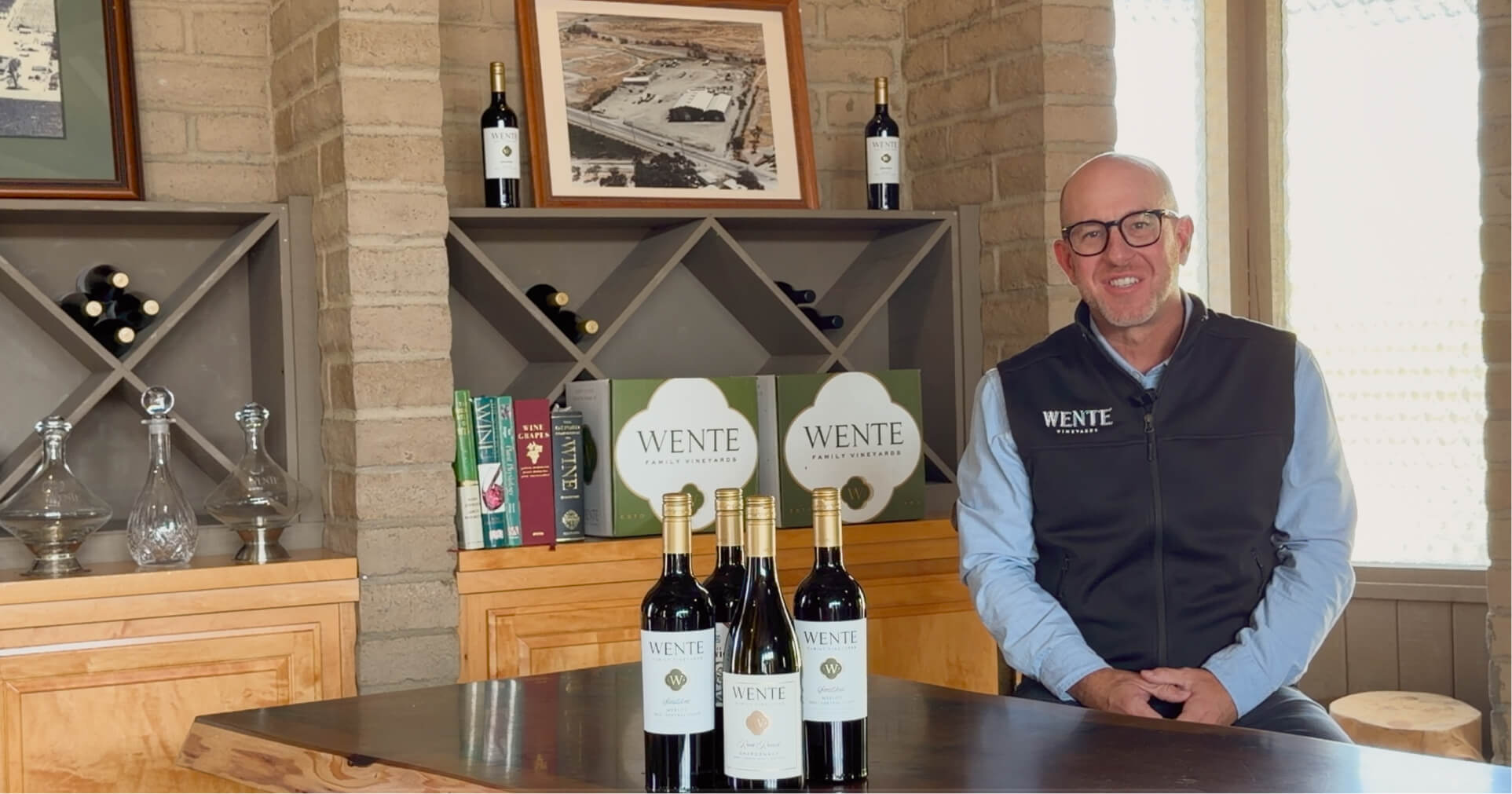
The question Wente Vineyards couldn’t answer is now the first thing Tom’s team looks at, together. “We actually use the software with our team on a daily basis to really understand where our downtimes are occurring on the line,” Tom says. “We can understand by equipment center where those downtimes are occurring, as well as run weekly, monthly, and annual reports to truly understand where we really need to focus our efforts to continuously improve the line.”
The breakdown by equipment center is what makes the daily read useful. Every stop is logged against the machine that caused it, so a jam on the case labeler shows up as a jam on the case labeler, with the minutes attached. That answers the first question: where the line stops. The weekly, monthly, and annual reports answer the third. Supply chain gets the trends it needs to schedule the line, and the improvement team gets a clear picture of where to spend its effort.
The supervisor who can’t be on the line all day
Those reports serve the people who plan the line. The same data serves the person who runs it, and he needs it on a shorter clock. Nick Giampaolo, Lean Operations Manager, is responsible for the bottling line through the shift, and a shift does not wait for him to be standing next to it.
“I can’t always be in here on the line watching it 24/7. I’m able to connect to Factbird and see how the line’s performing, or if the team’s having issues or struggling, in real time.” – Nick Giampaolo, Lean Operations Manager
When the line is down, Nick opens the registered stops, where every stop is logged with the reason behind it. That tells him what is happening right now, and it lets him read a whole shift back afterward. Here is how he describes the previous day: “I can see how they had a little bit of a struggle in the morning getting things going. Then there’s a case label jam. And then we went into our changeover, went through, had some lunch, another changeover. We had a lot of small runs yesterday.”
The point of that story is the conversation it starts. “This helps me tell a story of how the team is doing,” he says, “and it also helps me talk with the team on where they struggled and what we can improve upon, or how I can help them.”
Quality checks on the operators’ phones
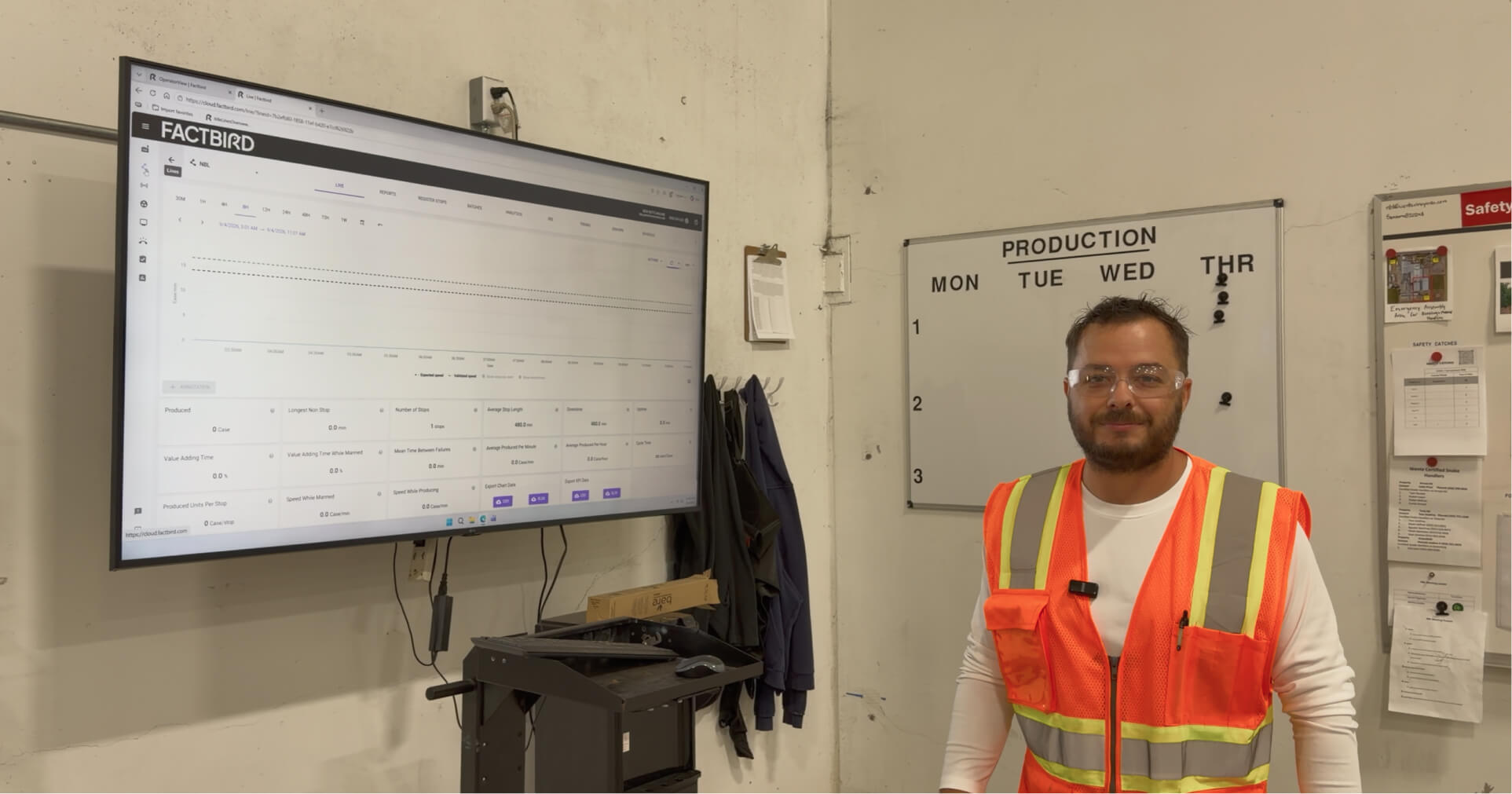
Nick reads the line from wherever he is. The operators are on it, and they carry the same system in their pockets. By using Factbird's Connected Operations, they log their quality control (QC) checks on their phones as they go, and the system flags a check that has not been done.
That flag is the part Tom Godfrey cares about. A check that gets logged is useful, but a check that gets skipped is the one you want to hear about. And preferably before the pallet leaves the building.
“It also flags when they haven’t done a QC check,” Tom says. “So it allows our supervisors to stay on top, ensuring that our quality is what our customers expect.”
A missed check becomes visible while there is still time to do something about it, instead of surfacing later, if at all. Which also means the operators, the supervisors, and Tom are all looking at the same record of the shift: what ran, what stopped, and what was checked.
The monthly report that writes itself
Every month, Nick reports to Wente Vineyards' executive team on how the line performed, but building that report by hand is time-consuming. With Factbird, Nick only needs to set everything up in the Report Builder once, and the report lands every month, on time, without him touching it.
“We created this report to just automatically upload every month on how we’re performing. So I can easily just say, here it is, and it takes care of everything for me. I don’t have to go into Excel and cut and paste and create graphs.” – Nick Giampaolo, Lean Operations Manager
The report covers line efficiency, the top five stop reasons, and changeover performance. That is enough for the executive team to see how the line is doing and where it loses time, and it is the same view Nick works from on the floor. In Nick’s words, “all things that I care about and what my boss cares about.”
The results
A year on, the answers are moving in the right direction. “Right now our lines are dramatically improved,” Tom says. “Overall equipment effectiveness (OEE) is up probably 10 to 20% over the last year or so. Our changeovers are also improving.”
The original problem was understanding a new line. That part is settled. What is left is the ongoing work of making it run better, which is what the daily reads and the monthly reports are for.
“We are so thrilled with Factbird,” Tom says. “It really helps our team understand how our lines are performing here.”
Closing thought
Wente Vineyards needed three answers from one line: where it stops, how changeovers go, and what to plan around. The same data now answers all three at three levels. Operators log stops and QC checks on the floor. Nick reads the day back and talks to his team about it. The executive team gets the monthly report without anyone opening a spreadsheet.
One line, one set of numbers, read the same way from the floor to the top of the company.